Growing your HVAC business online requires a clear, strategic framework built on proven digital marketing tactics. At its core, the blueprint includes optimizing your website, targeting local SEO, leveraging paid advertising, and using automation to convert leads. Successful contractors follow a structured approach that builds visibility, captures demand, and nurtures prospects over time.
This guide presents a step-by-step digital blueprint, supported by technical comparisons and market data. Whether you’re new to digital or scaling your presence, this framework is designed to create measurable growth.
Core Components of the Digital HVAC Growth Blueprint
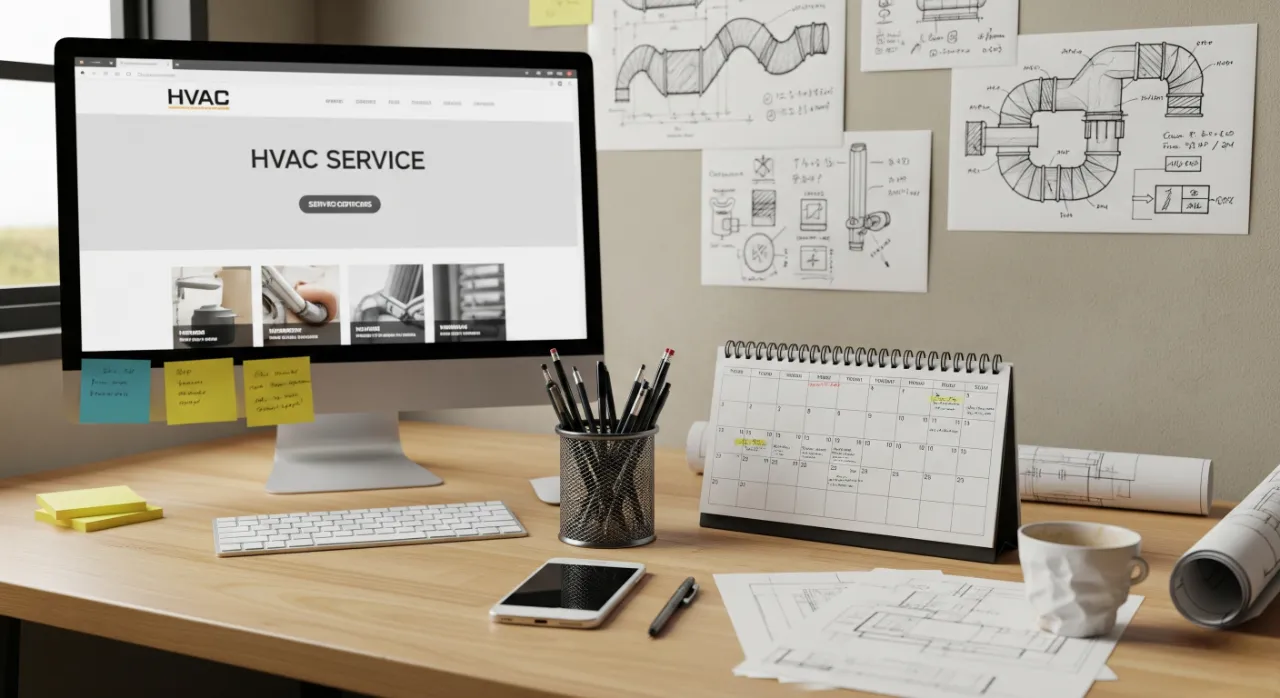
Optimized HVAC Website as a Conversion Hub
Your website must act as the central lead-generation hub. It should:
- Load in under 2 seconds
- Be mobile-responsive
- Include high-intent pages (e.g., AC repair, emergency heating service)
- Feature CTA-driven design with clear contact options
Bonus Tip: Use heatmaps (like Hotjar) to track user interaction and improve conversion flow.
Local SEO and Google Business Optimization
Local search visibility is the most powerful organic channel for HVAC businesses.
- Set up and verify Google Business Profile
- Add consistent NAP (Name, Address, Phone) across directories
- Generate local reviews and respond actively
- Optimize service area landing pages with city + service terms
Market Insight: 87% of consumers used Google to evaluate local businesses in 2023 (BrightLocal).
HVAC Paid Advertising Strategy
Paid ads can deliver fast visibility, especially in competitive areas.
- Use Google Local Services Ads for emergency intent
- Run PPC campaigns targeting service + city keywords
- Use ad extensions like callouts, location, and structured snippets
Bonus Tip: Use call tracking software (e.g., CallRail) to tie ad clicks to actual phone leads.
Content and Blogging for Long-Term SEO
Informative content helps your site rank for long-tail keywords.
- Write blog posts answering common HVAC questions
- Target seasonal search trends (e.g., “Why is my AC blowing warm air?”)
- Use schema markup to boost visibility in search snippets
CRM and Lead Automation
Use marketing automation tools to follow up quickly and efficiently.
- Set up autoresponders for contact form submissions
- Use a CRM to track lead status and lifetime value
- Automate review requests post-service
Technical Specs Table:
| Feature | Recommended Standard |
|---|---|
| Website Load Speed | Under 2 seconds |
| Mobile Optimization | Fully responsive, adaptive design |
| Google PageSpeed Score | 85+ (desktop/mobile) |
| CRM Tool | Jobber, ServiceTitan, Housecall Pro |
| Call Tracking | Dynamic number insertion enabled |
| Blog Posting Frequency | 2x per month minimum |
Digital Marketing Comparison Table for HVAC
| Method | Cost | Time to See Results | Long-Term ROI | Best Use Case |
|---|---|---|---|---|
| Local SEO | Low-Medium | 3-6 months | High | Sustained organic visibility |
| Google PPC | Medium-High | Immediate | Medium | Lead volume during peak times |
| Facebook Ads | Low-Medium | 1-2 weeks | Medium | Brand awareness, retargeting |
| Blogging | Low | 4-8 months | High | Authority and SEO rankings |
| Google LSA | Medium | Immediate | High | Emergency/high-intent leads |
Things to Consider Before Making a Decision
- Service Area Size: Broader areas require more geo-targeted content and ad budgets.
- Seasonal Demand: Tailor budget and campaigns based on peak seasons (summer/winter).
- Competitor Activity: High-competition markets demand stronger PPC and SEO investment.
- Budget Flexibility: Digital strategies scale with available resources; allocate based on goals.
- Internal Resources: In-house staff may manage posting or require external help for SEO/PPC.
Bonus Tip: Conduct a digital audit before starting. Evaluate your site speed, rankings, and ad performance.
Make the Right Decision
Growing your HVAC business online requires a structured approach combining SEO, paid traffic, and automation. Start with your website foundation, then layer on local visibility and strategic advertising. Use analytics to refine your strategy and scale your results. Evaluate your current position, identify weak points, and apply the proven blueprint to build predictable lead flow and sustainable growth.
Common Questions
How long does it take to see results?
Local SEO takes 3-6 months. Paid ads show immediate results if properly configured.
Should I focus on SEO or Ads?
Use both. SEO builds long-term value. Ads capture short-term demand.
What’s the best platform to run HVAC ads?
Start with Google Local Services Ads and PPC. Then explore Facebook for retargeting.
How often should I post blogs?
At least twice a month. More frequent posting improves ranking potential.
Can I do it all in-house?
You can manage basic tasks, but technical SEO, PPC, and automation usually need expert support.