
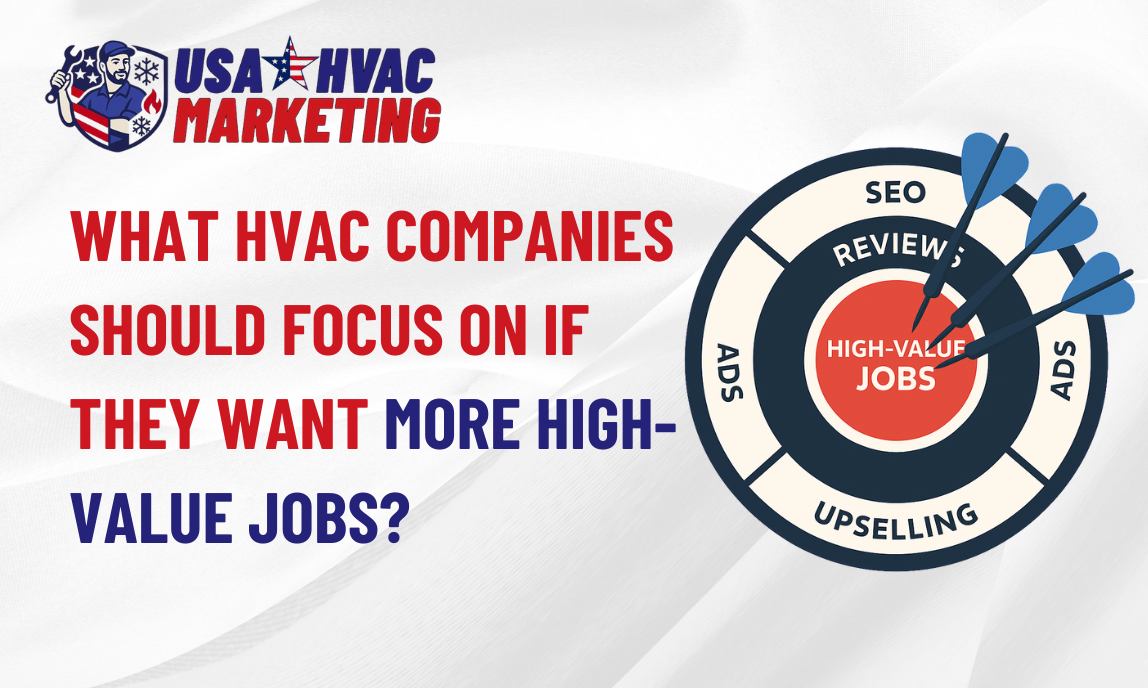
To attract more high-value jobs, HVAC companies need to shift their focus from reactive, low-margin repairs to proactive, high-ticket installations and service contracts. This involves strategically targeting commercial clients, specializing in advanced residential systems like geothermal or high-efficiency units, and building a brand that communicates expertise and quality. Instead of competing on price for emergency calls, successful companies build a reputation that justifies a premium for complex projects and ongoing maintenance agreements.
This guide provides a clear path for HVAC contractors looking to move into a more profitable market. The strategies outlined are based on direct experience in helping HVAC businesses grow by attracting clients who value quality over the lowest possible price.
Redefine Your Target Market
The most direct way to increase job value is to change who you are targeting. The typical residential repair client is often price-sensitive and looking for a quick fix. High-value clients have different needs and long-term perspectives.
Focus on Commercial and Industrial Clients
Commercial HVAC jobs are consistently higher in value than residential ones. They involve larger, more complex systems, and often lead to recurring revenue through service contracts. Consider targeting:
- Small to Medium-Size Businesses: Offices, retail stores, and restaurants require reliable climate control and are willing to invest in it.
- Property Management Companies: These firms manage multiple properties and look for dependable HVAC partners for both installations and maintenance across their portfolio.
- New Construction Projects: Working with general contractors on new builds provides predictable, large-scale installation work.
The global commercial HVAC market is expanding, with projections showing a compound annual growth rate of 6.2% from 2024 to 2030 source. Positioning your business to capture a piece of this growing market is a smart long-term strategy.
Target High-End Residential Installations
Not all residential work is low value. Homeowners investing in significant upgrades or new homes are prime candidates for high-ticket jobs. This includes:
- High-Efficiency Systems: Focus on systems with high SEER2 ratings. These have a higher upfront cost but appeal to clients interested in long-term energy savings.
- Geothermal and Ductless Systems: These technologies require specialized knowledge, which immediately sets your company apart and commands a higher price.
- Smart Home Integrations: Offer services that integrate HVAC systems with smart thermostats and home automation platforms.
Bonus Tip: In regions with extreme temperatures, like the hot summers of the Southwest or cold winters of the Northeast, create marketing campaigns focused on the significant energy savings and improved comfort from upgrading to a high-efficiency system. This climate-specific messaging is very effective.
Build a Brand That Commands a Premium Price
A strong brand is what allows you to charge more than the competition. It’s built on trust, professionalism, and perceived expertise. Price becomes less of an issue when a client is confident they are hiring the best.
Showcase Professionalism at Every Touchpoint
High-value clients expect a professional experience from start to finish. This includes:
- A clean, easy-to-navigate website with high-quality photos of your work.
- Technicians in professional uniforms who arrive in clearly branded vehicles.
- Clear, detailed proposals and transparent communication throughout the project.
Actively Manage Your Online Reputation
Your online reviews are your digital word-of-mouth. A study from BrightLocal found that 87% of consumers used Google to evaluate local businesses source. Encourage satisfied customers to leave reviews on Google and other relevant platforms. Respond professionally to all reviews, both positive and negative, to show that you are engaged and care about customer satisfaction.
The table below shows the operational differences between a business focused on low-margin work and one geared toward high-value jobs.
| Business Area | Low-Value Focus | High-Value Focus |
|---|---|---|
| Primary Service | Emergency repairs, basic tune-ups | System replacements, new installations, commercial maintenance |
| Target Client | Price-sensitive homeowners | Businesses, property managers, homeowners investing in upgrades |
| Marketing Message | “Fast service,” “Low prices” | “Expert solutions,” “Energy efficiency,” “Long-term reliability” |
| Sales Approach | Quick quotes, focuses on immediate fix | Consultative selling, provides options, explains long-term value |
| Technician Skillset | General repair knowledge | Specialized certifications, deep product knowledge |
Things to Consider Before Making a Decision
Building a premium brand is only part of the equation; it must be supported by strategic planning and investment. Shifting your business model is a significant move that requires careful thought, so before you commit, evaluate these factors.
- Training and Certification: Specializing in commercial or advanced residential systems requires investment in technician training and certifications. This is an upfront cost that pays off in the long run but needs to be budgeted for.
- Marketing Investment: Attracting a different type of client requires a different marketing strategy. You may need to invest in a new website, professional photography, and targeted digital advertising campaigns aimed at commercial property owners or high-income residential areas.
- Your Local Market: Analyze your service area. Is there a lot of new construction? Are there many commercial properties? Is there local demand for green technologies like geothermal? The opportunity has to exist in your market for the strategy to work.
- Sales Process: Selling a $20,000 commercial rooftop unit requires a different sales process than selling a $300 capacitor replacement. Your team needs to be trained in consultative selling, building relationships, and communicating long-term value.
Bonus Tip: Start small. Instead of trying to change your entire business overnight, pick one area to specialize in first. For example, you could start by marketing ductless mini-split installations to homeowners in older neighborhoods without existing ductwork.
Planning Your Move to Higher-Value Work
Successfully moving your HVAC business toward more profitable jobs comes down to a deliberate strategy. It starts with identifying a more valuable target audience, whether that’s commercial enterprises or homeowners seeking premium systems, and then building a brand that reflects expertise. Before you begin, take a serious look at your local market, your team’s skills, and your willingness to invest in the training and marketing necessary to make the change.
If you need help creating a marketing plan tailored to your specific goals and service area, the team at USA HVAC Marketing can provide a detailed analysis. Contact us for a consultation by phone at (315) 907-5444 or by email at [email protected] to discuss how you can start attracting more profitable work.
Frequently Asked Questions
How long does it take to see a return on this shift?
It typically takes 6 to 12 months to start seeing consistent results. Building a reputation and generating leads for high-value jobs doesn’t happen overnight. It requires consistent marketing and sales efforts.
Do I have to stop doing repair work?
No, not at all. Repair work can still be a valuable part of your business. The goal is to make it a smaller percentage of your total revenue. Many companies use their service department as a way to find leads for system replacements.
What is the best first step?
The best first step is to clearly define who you want to target. Once you know if you’re going after commercial clients or high-end residential, you can begin to tailor your marketing message, website, and sales process to attract them.
How do I find commercial HVAC leads?
Networking is key. Join local business associations like the Chamber of Commerce, connect with general contractors, and build relationships with commercial real estate agents and property managers. A targeted digital marketing campaign using platforms like LinkedIn can also be effective.
Is financing a good option to offer for high-value jobs?
Absolutely. Offering flexible financing options makes a $15,000 system replacement much more manageable for a homeowner or small business. It can be the deciding factor that allows a client to choose a higher-efficiency system over a basic model.
What marketing channels are best for attracting high-value clients?
A professional website optimized for search engines (SEO) is fundamental. Beyond that, targeted Google Ads aimed at searches like “commercial HVAC contractor” or “geothermal installer near me” work well. Case studies and testimonials showcasing your expertise are also very powerful.
How important is a professional website for this strategy?
It’s extremely important. Your website is often the first impression a potential high-value client will have of your business. It needs to look professional, clearly state your specializations, and feature project galleries, case studies, and customer testimonials. A cheap or outdated website will immediately undermine your efforts to be seen as a premium provider.
Sources
- Grand View Research – This report provides market size, share, and trend analysis for the global commercial HVAC industry, supporting the claim that this is a growing market.
- BrightLocal – This annual survey details how consumers use online reviews to select local businesses, confirming the importance of managing an online reputation.