
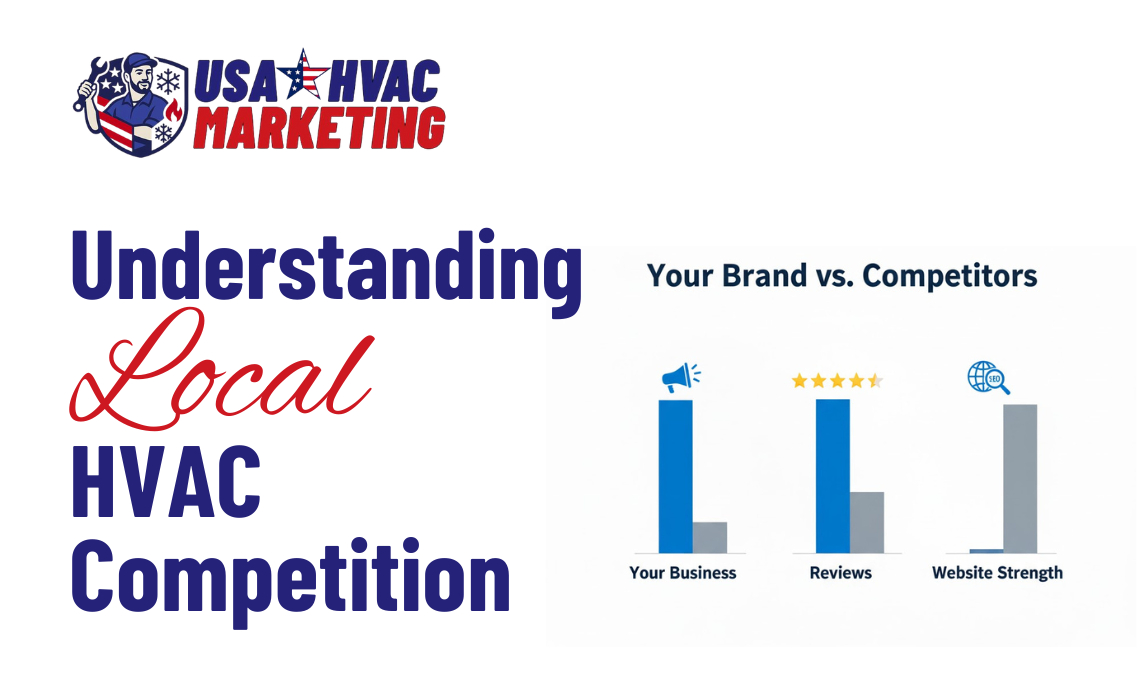
For an HVAC contractor, understanding local competition analysis means looking beyond a simple list of other companies in the area. It’s a detailed process of identifying who your direct competitors are, what they do well, where they fall short, and how customers perceive them. This information helps you find gaps in the market, define your unique selling proposition, and make smarter decisions about your services, pricing, and marketing. A proper analysis isn’t about copying others; it’s about positioning your business to stand out and attract the right customers.
This guide provides a straightforward method for analyzing the competitive field in your service area. The insights here come from direct experience in helping HVAC businesses grow. By understanding these steps, you can turn competitive data into a clear plan for your company’s growth.
Identifying and Categorizing Competitors
The first step is to figure out who you’re actually up against. Your competition isn’t every single person with an HVAC license. They fall into specific categories.
Direct Competitors
These are the businesses most like yours. They operate in the same service area, target similar customers (e.g., residential, light commercial), and offer a comparable range of services.
Indirect Competitors
These businesses offer services that could be an alternative to yours. This might include large home improvement stores that subcontract installations or specialized electricians who handle certain HVAC-related wiring jobs.
Future Competitors
New businesses or companies expanding into your territory are also worth watching. Keeping an eye on business registrations or local trade news can give you a heads-up.
Once you have a list, you can start digging into the details of your direct competitors, as they have the biggest impact on your day-to-day business.
Key Areas for Competitive Evaluation
A thorough analysis requires looking at several parts of a competitor’s business. Focusing on these areas will give you a complete picture of their operations and market position.
Online Presence and Marketing
How a competitor presents themselves online is often how customers find and judge them. Look at their:
- Website: Is it modern and easy to use on a phone? Does it clearly list their services and service area?
- Search Engine Ranking: When you search for “AC repair in [Your City]” or “furnace installation,” where do they appear? Are they in the top map listings?
- Online Reviews: Check their ratings on Google, Yelp, and Angi. Read both positive and negative reviews to spot patterns in their customer service, pricing, or technical skills. A survey from BrightLocal found that 87% of consumers used Google to evaluate local businesses in 2020 source.
- Social Media: Are they active on platforms like Facebook? Do they engage with customers or just post ads?
Services and Operations
Understanding what they offer and how they operate reveals their business model.
- Service Offerings: Do they specialize in a particular brand like Trane or Carrier? Do they offer niche services like geothermal or ductless mini-splits?
- Pricing Structure: While exact prices are hard to find, look for clues. Do they advertise financing options, seasonal promotions, or flat-rate diagnostic fees?
- Service Area: Check their website or Google Business Profile for a clear map or list of towns they serve. Are there areas they cover that you don’t, or vice versa?
Competitor Snapshot
| Competitor Name | Key Services | Online Review Score (Google) | Primary Service Area | Unique Selling Point |
| Cool Breeze HVAC | Residential AC repair, furnace install | 4.8 stars | North Suburbs | 24/7 emergency service |
| Reliable Heating | Boiler repair, commercial systems | 4.5 stars | Downtown, East Side | Specializes in historic buildings |
| Anytime Comfort | Ductless systems, maintenance plans | 4.9 stars | Entire County | Strong financing options |
Bonus Tip: Create a simple spreadsheet to track this information. Update it every six months to stay current with market changes.
Things to Consider Before Acting on Your Analysis
Gathering data is only half the battle. Before you make any big changes based on your findings, think about a few internal factors.
- Your Budget: If you find a competitor is outspending you on Google Ads, determine if you have the budget to compete directly or if you should focus on other areas, like building up local SEO.
- Your Team’s Skills: If you notice a gap in the market for geothermal system installations, assess whether your technicians have the necessary training and certifications. Rushing into a new service without the right expertise can damage your reputation.
- Your Brand Identity: Any strategic shift should feel authentic to your business. If you’ve built your brand on being the most affordable option, suddenly trying to compete with a high-end, premium provider might confuse your existing customers.
Regional and Climate-Based Differences
Competition in the HVAC industry isn’t the same everywhere. Your local climate heavily influences customer needs and, therefore, the competitive environment.
In hotter climates like those in the South, competition is intense around air conditioning repair and replacement, especially during the spring and summer. Competitors often focus on fast response times for emergency calls and promotions for high-efficiency units that lower energy bills.
In colder regions like the Northeast, the focus shifts to heating systems. Competition picks up in the fall as homeowners prepare for winter. Here, businesses might compete on the strength of their annual maintenance plans, boiler expertise, or fuel-to-electric conversions.
Bonus Tip: Pay attention to local energy rebates or government incentives. Competitors who actively promote these to customers often have an edge.
While local climate dictates the type of competition, the overall intensity is increasing everywhere. The HVAC market in the United States is projected to grow consistently, which will likely lead to more competition across all regions. According to Grand View Research, the market is expected to expand at a compound annual growth rate (CAGR) of 5.6% from 2023 to 2030 source, meaning that staying aware of your competition is more important than ever.
Final Thoughts on Analysis
Analyzing your local competition is not a one-time project. It’s an ongoing business process that helps you adapt to market changes, identify new opportunities, and make sure your business stays relevant. By consistently paying attention to what other HVAC contractors in your area are doing, you can better position your own company for long-term success. The goal is to make informed decisions that strengthen your business from the inside out.
Position Your Business for Success
Understanding your competitive environment is the first step, but creating a marketing strategy that sets you apart is the next. If you need help turning your analysis into action, contact USA HVAC Marketing for a clear path forward.
Email: [email protected]
FAQs
What’s the biggest mistake HVAC companies make with competitor analysis?
The most common mistake is focusing only on price. While pricing is a factor, your competitors’ reputation, speed, reliability, and the quality of their customer service often have a much greater impact on a customer’s decision.
Can a smaller HVAC company compete with a large, established one?
Absolutely. Smaller companies can succeed by being more agile. They can specialize in a niche service that larger companies don’t focus on, offer more personalized customer service, or build a strong reputation in a specific neighborhood or community.
Are online reviews really that important?
Yes. They are a form of digital word-of-mouth. Positive reviews build trust and credibility before a potential customer even calls you. Negative reviews, if handled professionally and promptly, can also show that you care about customer satisfaction.
Should I copy my competitor’s marketing strategy?
No. You should learn from it, but not copy it. See what seems to be working for them, like running Facebook ads or sponsoring a local event, and then figure out how to create your own unique version that fits your brand and budget.
Sources:
- BrightLocal – This survey provides data on how consumers use online reviews to select and evaluate local businesses, highlighting the importance of a positive online reputation.
- Grand View Research – This industry report offers projections and analysis on the growth of the U.S. HVAC systems market, useful for understanding long-term competitive trends.