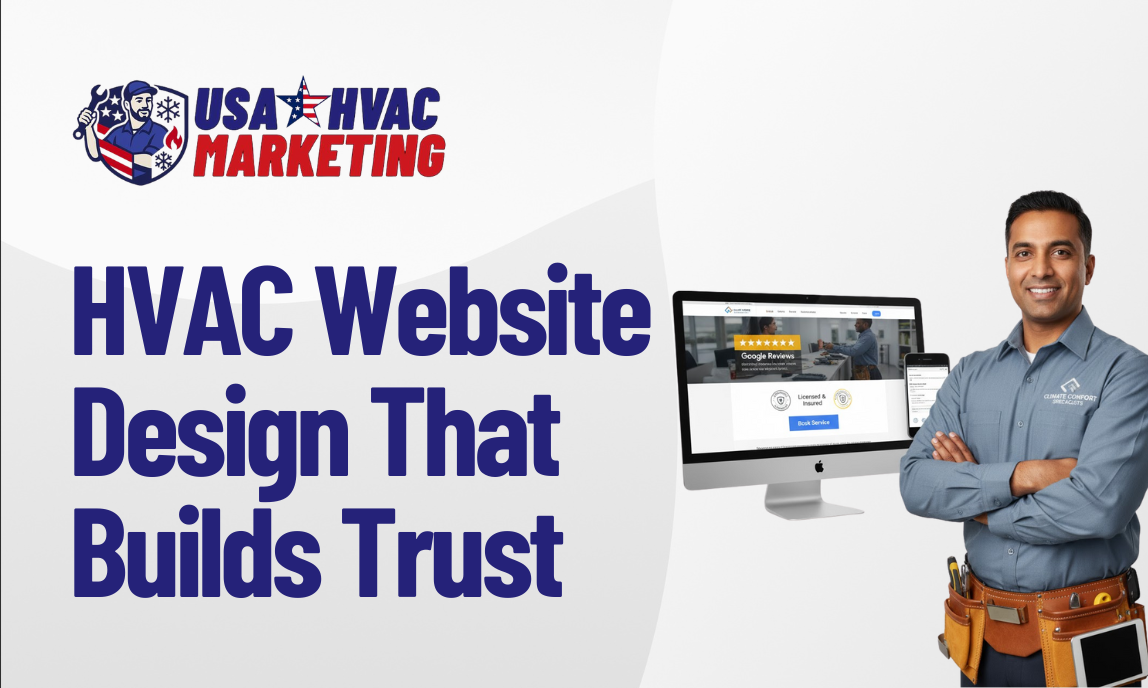
To build customer confidence, an HVAC website must feature a professional, mobile-friendly design, easily accessible contact information, and authentic social proof like customer reviews and industry certifications. When a potential customer lands on your site, often in a hurry because their AC or furnace just broke, these elements instantly signal that your business is legitimate, reliable, and trustworthy. A site that looks clean and works well on a phone tells them you’re a serious professional, while seeing testimonials and clear service details reassures them that you can solve their problem effectively.
This guide comes from years of experience building websites specifically for HVAC contractors and seeing firsthand what turns a visitor into a paying customer. The focus is on practical, trust-building elements that address a homeowner’s immediate needs and concerns, helping you stand out from competitors who overlook these simple but powerful details.
Foundational Trust Signals Every HVAC Site Needs
Before a customer even reads about your services, they form an impression based on what they see. Your website’s initial appearance and functionality are your first opportunity to earn their trust.
Professional and Mobile-First Design
A cluttered, outdated, or broken website immediately suggests a lack of professionalism. On the other hand, a clean, modern layout with high-quality images communicates that you are a serious business that pays attention to detail. With a significant portion of web traffic coming from mobile devices, a responsive design is non-negotiable. Research shows that 63% of all website visits in the U.S. now come from smartphones. If a customer with a broken furnace has to pinch and zoom to find your phone number, they will likely just go to a competitor’s site.
Prominent Contact Information
When a customer needs HVAC help, it’s often an emergency. They don’t have time to search for your contact details. Your phone number should be clearly visible at the top of every page. A contact form or a “Request Service” button should also be easy to find.
- Bonus Tip: Make your phone number a “click-to-call” link on mobile devices. This simple feature removes a step for users in a hurry, making it easier for them to connect with you.
Demonstrating Expertise and Reliability
Once your site looks professional, you need to prove you have the skills and reputation to do the job right. This is where social proof and transparency become very important.
Authentic Customer Reviews and Testimonials
Word-of-mouth is powerful, and online reviews are its digital equivalent. A study by BrightLocal found that 87% of consumers read online reviews for local businesses in 2020 source. Integrating a feed of recent Google or Yelp reviews directly onto your site provides fresh, authentic proof of your quality work. Manually adding a few detailed testimonials that highlight specific problems you solved can also be very effective.
Certifications and Affiliations
Displaying logos from organizations like NATE (North American Technician Excellence), the Better Business Bureau (BBB), or manufacturers like Trane and Carrier instantly builds credibility. These badges show that your business meets industry standards and is recognized by respected third parties.
Real Photos of Your Team and Work
Stock photos are easy to spot and can make a business feel generic and impersonal. Using real photos of your technicians, your branded trucks, and your team at work creates a genuine connection. It shows customers the actual people who will be coming to their homes, which can reduce a lot of the anxiety associated with hiring a new contractor.
Content That Answers Customer Questions
A confident customer is an informed customer. Your website should proactively answer the questions they have, showing that you understand their needs.
Upfront Pricing Information
Many contractors avoid talking about price, but this can make customers nervous. While you can’t always give a fixed quote online, you can build trust by being transparent. Explain your pricing model, mention if you offer free estimates, and detail any financing options available. This clarity helps manage expectations and shows you have nothing to hide.
| Pricing Model | How It Works | Best For Building Trust By… |
|---|---|---|
| Flat-Rate Pricing | A fixed price is quoted for a specific job, regardless of hours worked. | Providing certainty and preventing surprises on the final bill. |
| Hourly Rate | Customers are billed for the time and materials used on the job. | Being transparent about labor costs, especially for diagnostic work. |
| Financing Plans | Offering payment plans through a third party for large jobs like new installations. | Showing empathy for budget constraints and making big projects accessible. |
Clear Service Area Details
Clearly define your service area with a list of towns or a map. This simple detail prevents frustration for potential customers who are outside your range and shows local expertise. For contractors in regions with distinct weather patterns, like the heavy snowfall areas around Syracuse or the humid summers in the South, mentioning your experience with climate-specific issues can build further confidence.
Things to Consider Before Making a Decision
Before investing in a new website or a redesign, HVAC owners should think about a few key points:
- Know Your Customer: Are you primarily serving residential homeowners, commercial properties, or both? Your site’s language, imagery, and features should appeal directly to your target audience.
- Define Your Goal: Is the main purpose of your site to generate emergency repair calls, book maintenance appointments, or sell new installations? Your primary goal should dictate the site’s layout and calls to action.
- Page Load Speed: Customers are impatient. According to Google, the probability of a user bouncing from your site increases by 32% as page load time goes from 1 to 3 seconds source. A fast, optimized site is essential.
Common Questions
- How important are staff bios and team photos?
Including short bios and real photos of your technicians is a great trust-builder. It humanizes your company, creates a genuine connection, and lets homeowners see the actual people who might be working in their house. - Should I list the specific brands I service?
Yes, absolutely. Homeowners often search for technicians certified to work on their specific brand, like Carrier or Lennox. Listing these on your site helps you appear in those searches and shows you have specialized knowledge. - Should I show my physical address on the site?
If you have a physical office or showroom that customers can visit, showing your address is a great trust signal because it proves you’re an established local business. If you operate from a home office, listing your city and service area is sufficient. - How often should I update my website’s content?
Adding new content like blog posts or updating testimonials every month or two keeps your site fresh for both search engines and repeat visitors. Outdated information, such as an old promotion from last winter, can make a business look neglected.
Key Takeaways for Building Trust
Ultimately, a trustworthy HVAC website boils down to three core principles. First, a professional, mobile-friendly design signals that you are a serious and detail-oriented business. Second, authentic social proof—like customer reviews, certifications, and real team photos—demonstrates your expertise and reliability. Finally, clear, upfront content about your services, pricing, and service area answers customer questions proactively, showing transparency and building confidence before they even contact you.
Final Thoughts on Building a Trustworthy Site
Building a website that inspires confidence isn’t about flashy graphics or complex features. It’s about showing customers that you are professional, reliable, and transparent. By focusing on a clean mobile design, providing clear information, and showcasing authentic social proof, you can create a site that works as your best salesperson, earning trust before you even answer the phone.
Need Help Building a Confident Online Presence?
Creating a website that effectively builds customer trust requires specific expertise. The team at USA HVAC Marketing has the experience to design a site that reflects your company’s professionalism and converts visitors into loyal customers.
For a direct consultation, you can reach out at (315) 907-5444 or send an email to [email protected].
FAQs
Why are team photos better than stock photos?
Real photos of your team, trucks, and completed jobs create a genuine connection. They show that you’re a real, local business, not a faceless corporation. This authenticity is a powerful way to build trust with homeowners.
Do I need to list the specific brands I service?
Absolutely. Homeowners often search for technicians certified to work on their specific brand, like Carrier or Lennox. Listing these on your site helps you appear in those searches and shows you have specialized knowledge.
Should I show my physical address on the site?
If you have a physical office or showroom that customers can visit, showing your address is a great trust signal. It proves you’re an established local business. If you operate from a home office, listing your city and service area is sufficient.
How often should I update my website’s content?
Adding new content like blog posts or updating testimonials every month or two keeps your site fresh for both search engines and repeat visitors. Outdated information, like an old promotion from last winter, can make a business look neglected.
Sources
- BrightLocal – This is an annual survey that details how consumers use online reviews to evaluate local businesses.
- Think with Google – This research from Google shows the direct impact of page load speed on website bounce rates.