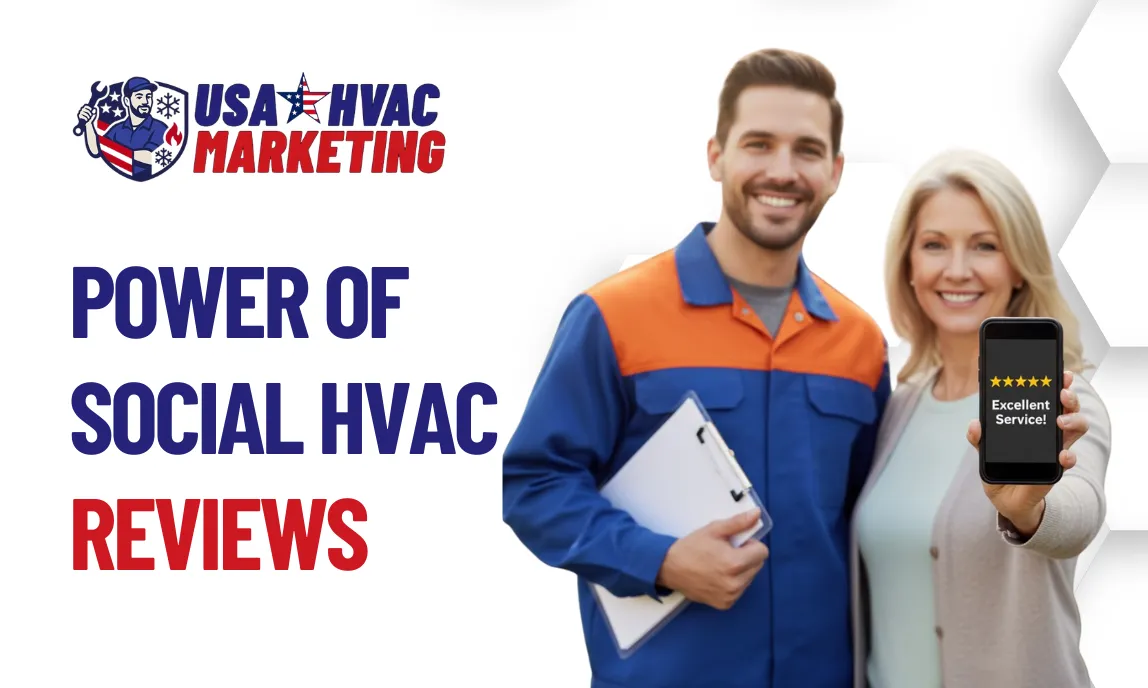
Social media reviews have become more valuable for HVAC contractors than traditional advertising. Today’s customers place immense trust in the documented experiences of their peers, making firsthand online feedback a more powerful tool for establishing credibility than billboards or radio spots. While traditional ads broadcast a message, social reviews start a conversation, build community trust, and provide compelling social proof that converts potential leads into loyal clients.
This shift isn’t just a trend; it’s a fundamental change in consumer behavior. This article will explain the specific reasons why focusing on customer reviews on social platforms can yield better results than a large ad spend. Drawing on years of experience in the digital marketing field, USA HVAC Marketing has seen firsthand how authentic feedback shapes customer decisions and drives sustainable business growth for heating and cooling companies.
The Modern Trust Economy
Consumers have grown skeptical of traditional advertising. They understand that a paid ad presents a company in the best possible light. In contrast, a review from a neighbor or community member feels credible and unbiased. This difference in perception is a game changer. Research confirms that a huge majority of consumers trust online reviews as much as personal recommendations. A 2023 survey from BrightLocal found that 98% of consumers use the internet to find information about local businesses, showing how critical an online presence is source.
For an HVAC business, credibility is everything. Homeowners are inviting technicians into their homes to perform complex and often expensive work. They need assurance that they are choosing a reliable, professional, and skilled company. A collection of positive Facebook recommendations or Google reviews provides that assurance in a way a slick flyer never can.
Cost vs. Perceived Value
Let’s look at the direct comparison between investing in traditional ad campaigns and cultivating online reviews. Traditional advertising requires a significant financial investment for a limited run, and its direct impact can be difficult to measure. Generating reviews, on the other hand, primarily costs time and a commitment to excellent service.
Here’s a simple breakdown of the differences:
| Feature | Traditional Advertising (e.g., Radio, Print) | Social Media Reviews (e.g., Google, Facebook) |
|---|---|---|
| Primary Cost | High financial investment | Time and excellent service |
| Trust Factor | Low; often viewed with skepticism | High; seen as authentic social proof |
| Audience Reach | Broad and untargeted | Targeted to local, actively searching customers |
| Lifespan | Temporary; ends when the campaign stops | Long-lasting and cumulative |
| Feedback Loop | One-way communication | Two-way; allows for direct engagement |
Bonus Tip: Encourage reviews by making it easy for customers. After a service call, send a follow-up email or text with a direct link to your preferred review platform. This simple step removes friction and can significantly increase the number of reviews you receive.
The Power of Direct Customer Engagement
Another key difference lies in communication: traditional ads talk at an audience, while social media reviews allow a business to talk with its customers. When a customer leaves a review, it opens a direct line of communication. Responding to both positive and negative feedback publicly shows that the business is listening, values customer opinions, and is committed to satisfaction.
This interaction is incredibly valuable. It turns a simple transaction into a relationship. Other potential customers see these public responses and gain confidence in the company’s customer service practices. This active engagement helps build a positive reputation that money alone can’t buy. According to ReviewTrackers, businesses that reply to reviews earn up to 49% more revenue, highlighting the financial benefit of engagement source.
Regional and Climate Considerations
For HVAC companies, local relevance is key. In areas with extreme weather, like the hot summers of Arizona or the frigid winters of Minnesota, homeowners rely heavily on local recommendations. A positive review from someone in the same neighborhood facing the same weather challenges carries more weight than a generic radio ad. It speaks directly to the specific needs of that community, whether it’s an emergency AC repair during a heatwave or a furnace installation before a blizzard.
Things to Consider Before Shifting Your Focus
Making social reviews a central part of a marketing strategy requires a plan. It’s not just about passively waiting for feedback to appear.
- Choose Your Platforms Wisely: Don’t try to be everywhere at once. Focus on the platforms where your customers are most active. For most HVAC contractors, Google Business Profile and Facebook are the most effective places to start.
- Develop a Process for Requesting Reviews: Create a consistent, non-intrusive system for asking satisfied customers to share their experiences. This could be part of the final invoice or a follow-up email.
- Have a Plan for Negative Reviews: Negative reviews will happen. The key is to respond quickly, professionally, and publicly. Offer to resolve the issue offline. A well-handled negative review can often become a net positive, showing potential customers that you stand behind your work.
- Showcase Your Best Reviews: Use positive reviews as marketing content. Share screenshots on your social media pages or feature them prominently on your website.
Bonus Tip: Personalize your review requests. Mentioning the specific technician who performed the service or the type of work done can make the request feel more genuine and increase the likelihood of a response.
Strategic Questions for Your Business
How long does it take to see results from focusing on reviews?
Building a strong base of reviews takes time and consistency. While you might see some initial engagement quickly, it generally takes a few months of dedicated effort to build a reputation that significantly influences new customers.
Are paid review services a good idea?
Absolutely not. Paying for fake reviews is unethical, violates the terms of service of most platforms, and can permanently damage a business’s credibility if discovered. Genuine reviews are always the better long-term strategy.
Final Thoughts
While traditional advertising still has a place, its influence is waning in the face of authentic, peer-to-peer recommendations. Social media reviews provide the social proof that modern consumers demand before making a purchasing decision, especially for important home services like HVAC. By focusing on delivering exceptional service and encouraging customers to share their experiences online, HVAC companies can build a trusted reputation that serves as their most effective and sustainable marketing asset.
Get in Touch
Ready to build a marketing strategy around your company’s reputation?
The team at USA HVAC Marketing can help you develop a system for generating and managing reviews that attract new customers. For more information, contact the team at [email protected] for a consultation.
FAQs
How do I get my first few reviews?
Start with your most recent satisfied customers. Reach out to them personally, explain that you’re trying to build your online presence, and ask if they would be willing to share their experience. A personal request is often very effective.
What should I do if a review contains false information?
If a review is factually incorrect, you can flag it for removal by the platform. In your public response, state the facts calmly and professionally without getting into a heated argument. For example, “Thank you for your feedback. Our records show the service was performed on a different date. Please contact our office directly so we can address your concerns.”
How often should I respond to reviews?
Aim to respond to all new reviews, both positive and negative, within 24 to 48 hours. Prompt replies show that you are attentive and value customer feedback.
Should I only ask happy customers for reviews?
While it’s natural to focus on happy customers, you should have a system to request feedback from everyone. This provides a more balanced and credible representation of your business. It also gives you a chance to identify and resolve issues you might not have known about.
Sources
- BrightLocal – This link provides the 2023 Local Consumer Review Survey, offering extensive data on how modern consumers use and trust online reviews.
- ReviewTrackers – This report from ReviewTrackers offers statistics on the impact of online reviews and business responses on consumer behavior and revenue.