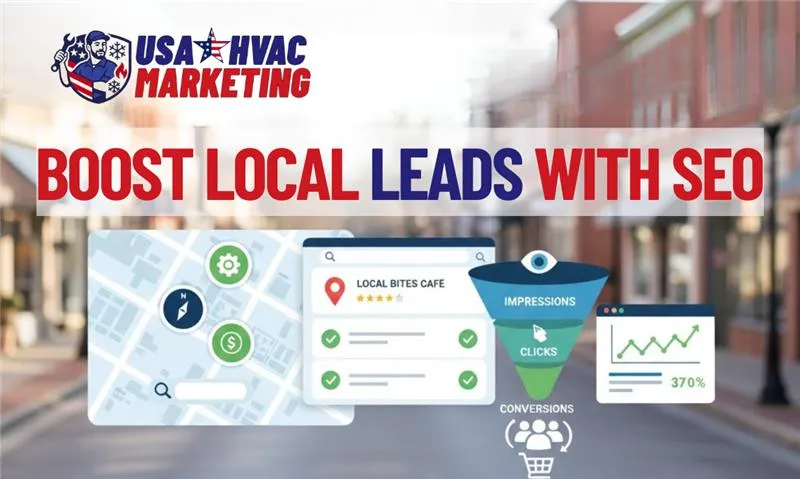
SEO for HVAC companies directly improves lead flow by making their services visible to local customers at the exact moment they’re needed. When a homeowner’s air conditioner fails on a hot day, their first move is often to search for terms like “emergency AC repair near me.” A solid SEO for HVAC strategy ensures your business appears at the top of these results, driving more calls and booked appointments through optimized service and location-specific keywords.
This guide covers the practical steps behind local SEO for HVAC contractors, helping you grow visibility and generate a steady stream of qualified leads, based on years of hands-on experience working with HVAC contractors nationwide.
The Foundation of HVAC Local SEO
For an HVAC business, showing up in local search is everything. Success with local SEO for HVAC starts with a strong, consistent online presence focused on your specific service area.
Google Business Profile Optimization
Your Google Business Profile (GBP) is often the first interaction a potential customer has with your business, and it’s an important tool for local SEO for HVAC companies. An optimized profile can appear in Google Maps and the Local Pack.
Key steps include:
- Consistent NAP: Keep your Name, Address, and Phone number identical across your website and every directory.
- Service Area: Clearly define the cities, towns, and ZIP codes you serve.
- Categories: Select “HVAC contractor” as your primary category, with relevant secondary categories such as “Air conditioning repair service” or “Heating contractor.”
- Photos and Videos: Regularly upload images of your team, service vehicles, and completed jobs.
- Customer Reviews: Encourage satisfied customers to leave reviews. 88% of consumers say they trust online reviews as much as personal recommendations, according to BrightLocal’s Local Consumer Review Survey.
Bonus Tip: Respond to every review, positive and negative. A thoughtful response to a negative review can help build trust with prospects who read it later.
On-Page SEO for HVAC Company Websites
Your website needs dedicated pages for each service you offer, such as:
- Air Conditioning Installation
- AC Repair
- Furnace Maintenance
- Ductless Mini-Split Systems
- Commercial HVAC Services
Each page should target keywords relevant to that service, such as “furnace repair in [Your City]” or “new AC unit cost [Your City].” This helps you rank for a wider range of customer searches.
Building Local Citations
Citations are mentions of your NAP information on other websites. Consistent citations across directories like Yelp, Angi, and the Better Business Bureau can reinforce your business information and support local search visibility.
HVAC SEO Lead Generation Through Content
Content marketing positions your business as an expert resource for customers researching their HVAC problems, which can support steady HVAC SEO lead generation over time.
Blogging About Common HVAC Issues
A blog can capture customers early in their decision-making process. Topic ideas include:
- “5 Signs You Need to Replace Your Air Conditioner”
- “How to Improve Your Home’s Air Quality”
- “Why Is My Furnace Making a Strange Noise?”
Creating Location-Specific Landing Pages
If you serve multiple towns, build a dedicated city page for each one. Mention local landmarks or area-specific details where relevant.
For example, a coastal city page might cover preventing rust and corrosion on outdoor units caused by salty air. This type of local SEO marketing for HVAC contractors helps demonstrate local relevance to both customers and search engines.
Measuring SEO Success for Your HVAC Business
| Metric | What It Measures | Why It Matters for HVAC |
|---|---|---|
| Organic Traffic | Visitors finding you through search engines | Shows more people discovering your business online |
| Keyword Rankings | Your position for terms like “AC repair” | Higher rankings can bring more qualified search traffic |
| GBP Insights | Clicks, calls, and direction requests | Helps measure local listing engagement |
| Lead Form Submissions | People filling out your contact form | Tracks visitor-to-lead conversion |
Planning Your SEO for HVAC Business Strategy
- Budget and Timeline: SEO is a long-term investment, typically taking 4 to 6 months for significant results.
- DIY vs. Hiring an Agency: A specialized HVAC local SEO company can often provide more focused expertise than handling SEO entirely in-house.
- Target Service Areas: Focus on primary service locations before expanding. Trying to rank everywhere at once can make your strategy less focused.
Final Thoughts
Improving your online visibility through SEO for HVAC contractors can help increase lead flow by connecting your business with local customers actively searching for HVAC services.
Focus on your Google Business Profile, targeted service and location content, and a technically sound website to build stronger local visibility and attract more qualified prospects.
Frequently Asked Questions
What Are the Most Important Keywords for an HVAC Business?
Service and intent-based terms include “emergency AC repair,” “new furnace installation,” “[your city] HVAC contractor,” and “air conditioning service near me.” You can also target model-specific keywords if you specialize in certain brands.
Why Are Online Reviews So Important for HVAC SEO?
Reviews can influence local search visibility and strongly affect customer trust. A steady stream of positive reviews can reinforce your business’s credibility with both potential customers and search engines.
Can SEO Help During the Off-Season?
Yes. SEO can be used to promote preventative maintenance, indoor air quality solutions, or pre-season tune-up specials to help maintain demand during slower periods.
How Does Voice Search Affect HVAC SEO?
Voice searches are often phrased as questions, such as “Hey Google, who is the best HVAC contractor near me?” Make sure your content provides clear, direct answers to common customer questions.
Is a Mobile-Friendly Website Necessary for an HVAC Business?
Yes. Many local searches, especially urgent service searches, happen on mobile devices. Google’s mobile-first indexing also makes mobile usability an important consideration for websites.
How Long Does It Take for SEO to Work for an HVAC Company?
Typically, noticeable ranking and traffic movement can take around 3 to 6 months. Building consistent lead flow can take 6 to 12 months as the website develops authority and earns stronger rankings.
Is SEO Better Than Running Paid Ads?
SEO and paid advertising serve different purposes. Paid ads can generate leads quickly, but traffic from ads generally stops when the campaign stops. SEO can build a longer-term organic search asset.
Organic search drives over 53% of all website traffic, according to BrightEdge research. Many businesses use both SEO and paid advertising as part of their overall marketing strategy.
Get in Touch
To learn more about how a tailored digital strategy can grow your business, contact USA HVAC Marketing at [email protected] or [email protected].